Viserion
A Clash of KingsViserion is one of the three dragons born to Daenerys Targaryen and the middle child in the symbolic family she creates around them. His importance lies less in independent action than in the meaning Daenerys gives him: he carries the name of Viserys, the brother who was cruel, weak, and frightened, yet remained her brother. Through Viserion, a damaged familial memory is not erased but transformed into part of a new draconic future.
Identity and Naming
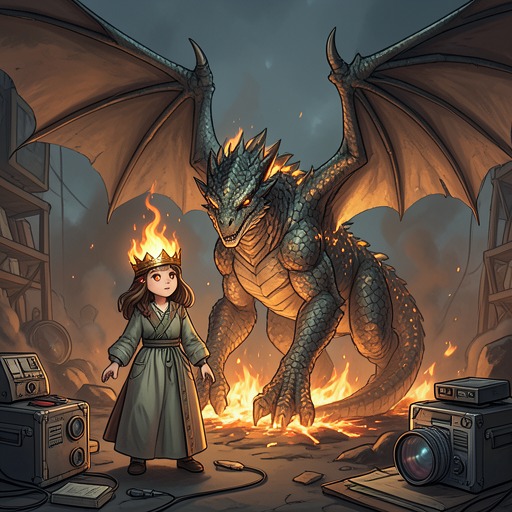
Viserion is the cream-and-gold dragon among Daenerys Targaryen’s three hatchlings. Daenerys names him during a journey through the Dothraki Sea, after recalling the dragons of Aegon the Conqueror and explaining that the creatures will be named for those whom the gods have taken. Rhaegal is named for her valiant brother who died on the green banks of the Trident; the cream-and-gold dragon receives the name Viserion, while the black dragon is called Drogon.
The name binds Viserion to Viserys without simply honoring him. Daenerys remembers Viserys as cruel, weak, frightened, and still her brother. The naming therefore holds affection, injury, and dynastic remembrance together. Viserion becomes a living memorial whose future may surpass the person whose name he bears: Daenerys says that his dragon will do what Viserys could not.
Relation to Daenerys and the Dragons
Viserion belongs to the unprecedented rebirth of dragons. Daenerys insists that the hatchlings are hers, born from her faith and need and given life through the deaths of Khal Drogo, her unborn son, and Mirri Maz Duur. She entered the flames as they came forth, and the dragons drank milk from her swollen breasts. Her claim over them is therefore at once maternal, political, and existential; they are not merely weapons available to the highest bidder.
Ser Jorah Mormont warns that the hatchlings are vulnerable and that every man who sees them will want them. Daenerys answers that no one will take them from her while she lives. Viserion consequently participates in the danger surrounding her new power: the dragons are still young enough to be threatened by an arakh, yet valuable enough to make their possession a matter of international ambition. His existence helps explain why Daenerys must seek a place where rival khalasars cannot reach her.
Symbolic and Political Significance
Viserion’s naming occurs as Daenerys’s khalasar withers in the Red Waste. While the dragons prosper, horses collapse, vegetation disappears, Doreah dies after a wasting fever, and the surviving people move through a landscape they fear may be hell. The contrast gives Viserion a particular force. He is evidence of vitality amid collective decline, a small but real sign that Daenerys’s journey has produced something the ruined khalasar cannot provide: a future rather than merely survival.
The dragons also alter the political horizon of the world around them. In Qarth, Daenerys rides through a wealthy port crowded with merchants, warlocks, foreign goods, brothels, temples, and slave traders while Drogon sits on her shoulder. Xaro Xhoan Daxos offers her luxuries and promises of a crown, and Pyat Pree offers truth and wisdom at the House of the Undying. Viserion is not singled out in that procession, but he shares in the presence that makes Daenerys a figure of wonder and danger. The three dragons turn a displaced young woman with a small khalasar into the bearer of a power that merchants, warlocks, and rulers seek to possess or control.
Narrative Role
The evidence does not give Viserion a separate voice, mature action, or independent objective. His characterization is instead relational and cumulative. He is identified by color, placed within the triad of Daenerys’s hatchlings, and defined by the dead brother whose name he carries. That limited presentation is significant: the dragons are emerging before the reader as living beings, but they also function as vessels of dynastic memory and possible restoration.
Viserion’s name joins the private and the historical. Viserys’s failure is remembered beside the greatness of Valyrian dragons and the legacy of Aegon’s conquest; the new dragon is asked to inherit the name without inheriting the weakness. In that contrast, Viserion represents Daenerys’s larger transformation of loss into lineage and vulnerability into political possibility.